About Home Fraud Defense®

Real estate fraud works in the gaps between the people in a transaction. We built the program that covers them.

Home Fraud Defense® is a real estate fraud prevention platform for MLSs, REALTOR® associations, brokerages and real estate agents, with client fraud notices at listing, pending and sold, client ID checks, owner of record notices, property checks, monthly fraud alerts, agent training and incident reporting.

2026 Inman Best of Proptech, Runner-Up · Cybersecurity and Data Protection in Real Estate

Why it exists
"Three damaging fraud attacks reached my business in six weeks. I went looking for resources for professionals and for the consumers they serve, and found none. So we built them."

John Rowan, Founder and CEO
Founder
John Rowan, Founder and CEO of Home Fraud Defense®
John Rowan
Founder and CEO, Home Fraud Defense®
Licensed Arizona real estate agent and REALTOR®More than 25 years in the real estate industry
ARELLO Affiliate MemberThe association of license law officials who regulate agents and brokers across North America
MemberAssociation of Certified Fraud Examiners; International Association of Financial Crimes Investigators
FAA Airline Transport PilotFormer Alaska Airlines and United Airlines pilot

John Rowan

John Rowan has spent more than 25 years in the real estate industry and is a licensed Arizona real estate agent and REALTOR®. He flew for Alaska Airlines and United Airlines, holds an FAA Airline Transport Pilot certificate, and has a background in fraud mitigation.

In six weeks, three damaging fraud attacks reached his business: a house offered to him with a forged deed, a caller impersonating the out-of-state owner of vacant land, and a seller being steered toward a sale by someone she had never met. The first ended in an arrest. In the same year he watched more than a dozen others hit people around him. Not one of them knew what to do or where to go, and neither did the licensees they had hired. He went looking for resources for professionals and consumers and found none, so he built them.
"Nobody in that transaction was trained to catch it. I happened to be. That is not a system, that is luck, and luck is not a defense."John Rowan

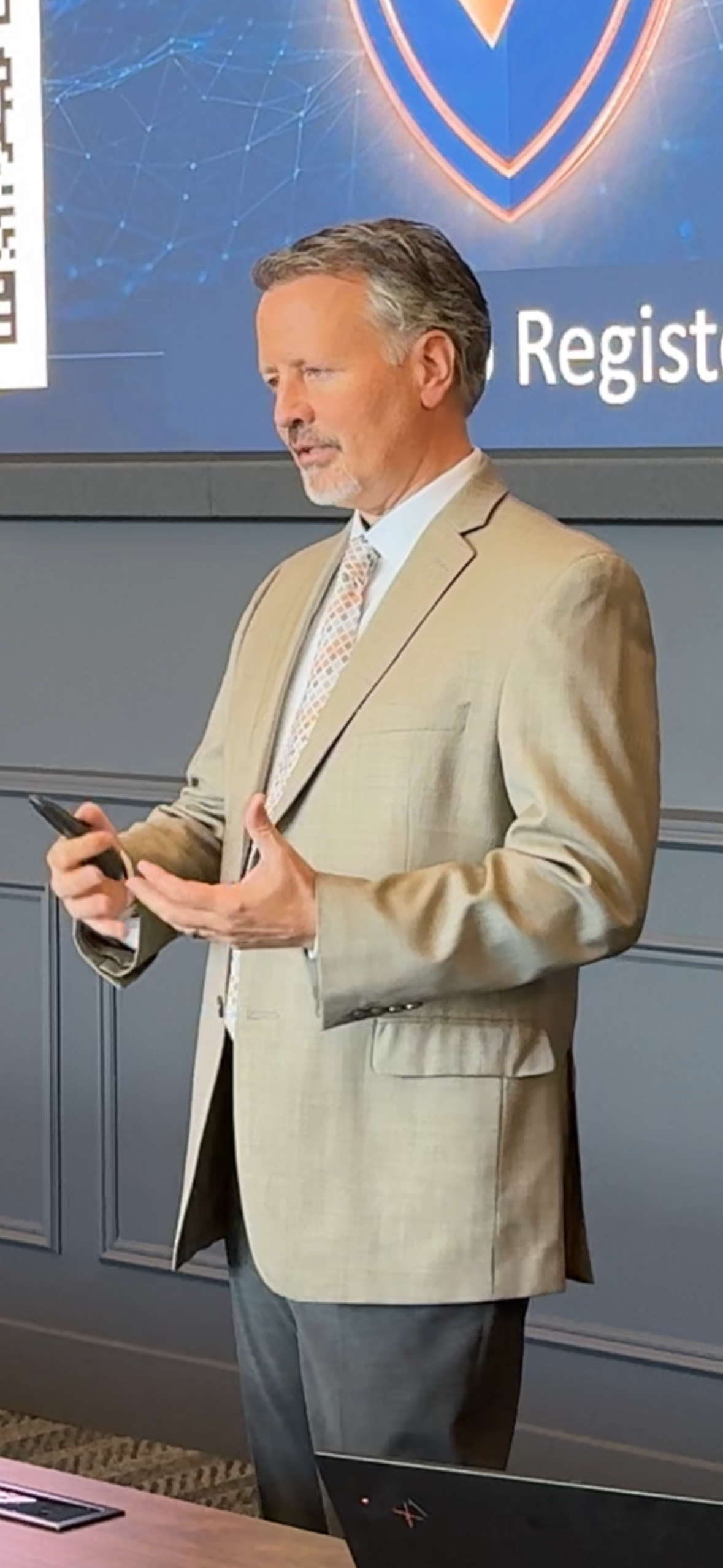
John Rowan presenting a real estate fraud lectureHe speaks on real estate fraud to prosecutors, financial crimes investigators, MLS and association executives, brokerages and university audiences, and consults on real estate fraud matters.

The program is built the way airline training is built: one standard every professional meets, recurrent updates as conditions change, and a record that it was done. Home Fraud Defense® serves real estate professionals and consumers nationwide.

HFDCP™ is a private credential. Not a state license.

The problem

Real estate is a prime target, and the way a transaction moves gives criminals their opening.

A home sale moves the largest sum of money most people ever handle, once, between parties who have never met, on a schedule that is public. The file passes from agent to lender to title to escrow, and every hand-off is an opening for a false email, a spoofed call or a forged document. After closing, the sale becomes public record and the targeting follows it for months. The numbers below show how often it reaches the people in the transaction.

Nearly 1 in 4
homebuyers received a fraudulent or suspicious communication during their closing.
Source
CertifID, 2026 State of Wire Fraud Report. 22% of homebuyers surveyed.
Nearly 2 in 3
recent buyers and sellers received a communication about their home or mortgage they believed was a scam.
Source
NORC at the University of Chicago, AmeriSpeak Omnibus, August 2026, commissioned by Home Fraud Defense®. 64% of the 92 respondents who bought or sold a primary residence in the past three years, asked about communications received in connection with buying, selling, refinancing or owning a home.
59%
say the agent who represented them did not discuss the fraud they might face, or they do not recall it.
Source
NORC at the University of Chicago, AmeriSpeak Omnibus, August 2026, commissioned by Home Fraud Defense®. 59% of the 86 recent buyers and sellers who had an agent: 42% say it was not discussed and 17% do not recall.
Where the gaps are

Four moments. One program covering all of them.

First contact

A buyer or seller nobody has met, a caller who wants to move fast, an owner whose records put them somewhere else. The agent is the only professional in the room.

More
The first client notice goes out here, under the agent's name.

Under contract

New parties, new email threads, and money about to move. Redirected wire instructions arrive in this window.

More
The client has the money rules in writing before anyone asks them to send anything.

Closing

Funds leave, and the recovery window with the bank and the FBI is measured in hours.

More
The client knows the number to call and the order to call in, because it was sent before closing, not after.

After closing

The sale is public record within days. Deed-copy solicitations, mortgage and warranty notices, impersonation and relationship schemes follow it for months.

More
The after-closing notice tells the client what is coming before it arrives.
What we built

One program, kept current, from first contact to the report.

Agent fraud training
A three-hour course on transaction fraud, updated as schemes appear. CE credit where approved.
More
Covers wire redirection, seller and buyer impersonation, deed and title fraud, fake listings and rental scams, and what arrives after closing.
Client notices
Sent from the agent's account at the start of a transaction and after closing, under the agent's name and brokerage.
More
The client acknowledges with one click. Every send is logged with the date, the recipient and the version of the notice.
Tools that describe, not decide
Message Scanner, Contact Lookup and Property Visibility Report describe what looks wrong. None confirms identity or declares anything fraudulent.
More
The scanner reads a screenshot of a text or email and names the pattern it sees. Contact Lookup shows what is publicly visible about a phone number or email. Property Visibility shows what the public record exposes about a home.
Local fraud response guide
Step-by-step guidance for the first hours after fraud is discovered, with a state-by-state directory of where to report. Open to anyone.
More
The directory covers the county recorder, the state real estate regulator, the state attorney general and the FBI's IC3. Inside the agent portal, response pages by scheme, from seller impersonation to catfishing.
Monthly alerts and client content
A dated fraud alert to every agent as new schemes surface, plus a monthly client letter and social graphics agents send as their own.
Broker office view
Brokers see participation, agents with no sends in 30, 60 or 90 days, and client acknowledgment rates.
More
A monthly Office Drill walks the office through a fraud response, and the broker sees who took part.
A dated record
What was sent, to whom, when, and whether it was acknowledged, downloadable for the transaction file.
Reporting portal
An agent who encounters fraud files one incident report from the portal. The broker receives it when the agent chooses to share it, and the record is kept.
More
A formatted copy can be forwarded to the brokerage's carrier or the authorities. Under an MLS or association program, the parcel, category and date reach a participating organization for data integrity only with the agent's explicit consent for that report.
Home Fraud Defense® does not confirm wire instructions and is never the verifier of record on a wire. It gives no legal advice and makes no claim that a loss will be prevented. Clients confirm wire instructions by calling their title or escrow company on a number they already had.
For MLSs and REALTOR® associations

The portal, opened to every member under one agreement.

Potential listing-status notices
Where an MLS participates and approves an integration, a new listing, a pending status and a closing could each trigger the right client notice from the agent's own account.
More
The warning goes out at the moment it matters without the agent having to remember, and the organization's name could appear on the notice once an approved program is live.
Fraud attempt report
An agent who encounters fraud files one report. The broker and a participating MLS receive it only with the agent's explicit consent for that report, limited for the MLS to the parcel, the category and the date for data integrity.
More
Nothing more reaches the MLS unless the agent agrees. Home Fraud Defense® holds the data; the organization collects none.
Member training
Monthly live sessions on current schemes, the three-hour course for every member, and consumer pages the organization can link to from its own site.
One view for the organization
Participation across the membership, with no member data leaving the program.

MLS integrations are not automatically active. They depend on MLS participation, platform capabilities and approval.

Protect yourself. Protect your property.

Consumer tools are open to anyone, with no account. Professionals start in the portal. Organizations start with a conversation.